Can you get pregnant with adenomyosis? Treatments that improve your chances
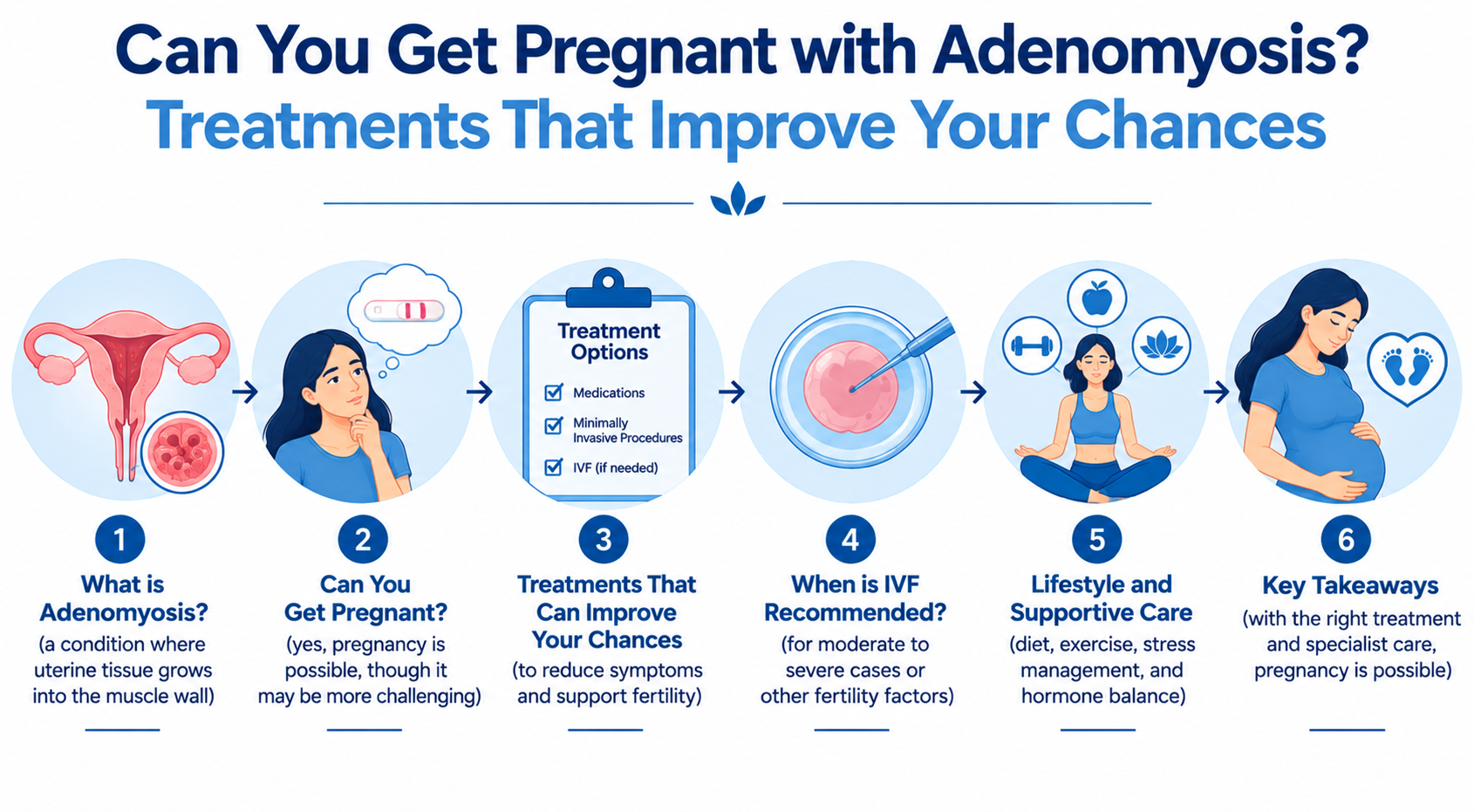
Many women diagnosed with uterine conditions ask: Can you get pregnant with adenomyosis? Yes, pregnancy is achievable with adenomyosis, though the condition can introduce specific challenges to conception and gestation.
In adenomyosis, the normal tissue lining the inside of the uterus (endometrium) grows into the muscle of the uterus (myometrium). The abnormal tissue proliferation can lead to local inflammation, uterus enlargement, impaired endometrial receptivity, and impaired uterine contractility.
At Allahbadia IVF, under the guidance of reproductive endocrinology and fertility specialist Dr. Gautam Allahbadia, tailored diagnostic workups and customized treatment strategies help women manage adenomyosis and achieve successful outcomes. This complete guide explores how adenomyosis affects fertility, modern clinical treatment options, and methods to optimize reproductive outcomes.
What is Adenomyosis and how does it impact uterine function?
Adenomyosis is a benign gynecological condition characterized by ectopic endometrial glands and stroma within the myometrium, leading to uterine enlargement, chronic inflammation, and altered uterine peristalsis.
To understand how getting pregnant with adenomyosis is impacted, it helps to distinguish between the two main anatomical presentations:
- Diffuse Adenomyosis: The ectopic endometrial tissue is scattered throughout large areas of the myometrial muscle wall, causing generalized uterine enlargement and thickening.
- Focal Adenomyosis (Adenomyoma): The tissue collects in a localized area, forming a nodular mass within the uterine muscle, similar in appearance to a uterine fibroid.
Both forms can disrupt normal uterine function by causing abnormal uterine contractions, localized biochemical inflammation, and altered blood flow to the endometrial lining where an embryo attempts to attach.
Can Adenomyosis cause infertility?
Yes, impaired fertility could be one of the effects of adenomyosis, because it can make the endometrium not receptive to the embryo, affect the transport of sperm, and disrupt normal embryo implantation.
Women asking can adenomyosis cause infertility should know that while it does not prevent conception in every instance, it affects several key physiological mechanisms:
Reproductive Mechanism | Impact of Adenomyosis | Clinical Consequence |
Uterine Peristalsis | Disrupts normal myometrial contraction waves during the fertile window. | Impairs directed sperm transport toward the fallopian tubes. |
Endometrial Receptivity | Alters local progesterone receptor expression and inflammatory markers. | Reduces the likelihood of successful blastocyst adhesion and invasion. |
Pelvic Environment | Increases local inflammatory cytokines and oxidative stress. | Affects egg quality, fertilization dynamics, and early embryonic development. |
Uterine Junctional Zone | Causes thickening of the inner myometrial layer (Junctional Zone > 12 mm). | Increases risk of implantation failure and early pregnancy loss. |
What are the chances of getting pregnant with Adenomyosis?
While natural conception rates may be reduced, medical down-regulation and targeted assisted reproductive technologies (ART) significantly improve overall chances of getting pregnant with adenomyosis.
Altered endometrial receptivity can lower natural pregnancy rates, and raise early pregnancy loss rates due to adenomyosis. However, adenomyosis pregnancy chances improve considerably when the condition is diagnosed early and managed with appropriate medical or fertility interventions.
During assisted reproduction, protocols designed to suppress uterine inflammation before an embryo transfer help restore a favorable uterine environment, thereby enhancing implantation rates.
What clinical treatments help improve pregnancy rates with Adenomyosis?
Treatment protocols combine medical hormonal suppression, tailored In Vitro Fertilization (IVF) strategies, and, in select cases, conservative surgical or procedural interventions. Managing a pregnancy with adenomyosis requires a personalized treatment approach based on the severity of symptoms, patient age, and overall reproductive goals:
1. GnRH Agonist Suppression Therapy
Gonadotropin-Releasing Hormone (GnRH) agonists are drugs used for 2-3 months before an embryo transfer that inhibit the production of estrogen. This temporary hypoestrogenic state shrinks the uterus, the size of adenomyotic lesions and the inflammatory state of the myometrium, resulting in a significant improvement in endometrial receptivity.
2. Tailored IVF and Frozen Embryo Transfer (FET)
Dr Gautam Allahbadia in many cases suggests women who are undergoing IVF to freeze all the embryos which are suitable for freezing (segmentation protocol) instead of trying a fresh transfer. That gives time to induce targeted GnRH agonist down-regulation to settle the uterus inflammation prior to preparing it for frozen embryo transfer (FET).
3. Conservative Medical Management
Women who intend to become pregnant in future cycles can receive progestin therapy (oral, or levonorgestrel-releasing intrauterine systems) to manage the symptoms and suppress focal adenomyotic activity.
4. Specialized Surgical and Non-Surgical Options
In rare cases when the size of the focal adenomyomas is large and causes a distortion of the endometrial cavity, surgical cytoreduction or uterine artery embolization (UAE) is an option, taking into account the risks and benefits of pregnancy in the future.
Partnering with Allahbadia IVF for Expert Fertility Support
Achieving a healthy pregnancy when managing uterine conditions like adenomyosis requires individualized evaluation and expert care. At Allahbadia IVF, Dr. Gautam Allahbadia and his clinical team utilize advanced diagnostic imaging, including high-resolution 3D transvaginal ultrasound and MRI evaluation, to assess myometrial involvement and junctional zone thickness.
We use personalized GnRH agonist protocols and frozen embryo transfer strategies, along with evidence-based reproductive treatments, to ensure the best uterine environment and support your journey to parenthood.
Take the next step toward your fertility goals
If you have questions about adenomyosis, fertility evaluations, or personalized IVF protocols, our experienced team is here to guide you. Book an appointment now.