Fertility after cancer treatment: What patients need to know
There have been many changes that come with cancer, but that’s not the end of the possibility of becoming a parent. Through advances in modern-day oncology and reproductive medicine, many oncology survivors today can create a family after treatment. Chemotherapy, radiation and some surgeries may impact your reproductive health, but the outcome for each person is different. Over time, some achieve spontaneous fertility after cancer treatment, and others might be helped by assisted reproductive treatments.
You may have finished cancer treatment and be wondering whether you can still become a mother or father. Yes, it is much more likely than you think. The first steps towards informed decision-making are to have a clear understanding of your fertility status and to seek advice from a fertility expert in time.
Cancer treatment can raise many questions about future fertility, but parenthood is often still possible with the right guidance. In this article, you’ll learn how chemotherapy and other cancer treatments affect fertility in both women and men, whether pregnancy after cancer treatment is safe, and the fertility options available after chemotherapy. We’ll also explain when IVF may be recommended and how modern fertility treatments can help cancer survivors take the next step toward building a family.
At Allahbadia IVF, Dr. Gautam Allahbadia and his experienced team help cancer survivors evaluate their fertility after cancer treatment and explore personalized fertility solutions based on their medical history, age, and future family goals.
How does cancer treatment affect fertility?
One of the most common questions patients ask is, “Can cancer treatment cause infertility?”
The answer depends on several factors, including:
- The type of cancer
- Your age during treatment
- The chemotherapy drugs used
- Radiation dose and treatment area
- Whether reproductive organs were affected by surgery
- Your fertility before treatment
Cancer therapies are designed to destroy rapidly dividing cells. Unfortunately, healthy reproductive cells may also be damaged during this process.
For some patients, these changes are temporary. For others, fertility may be permanently reduced.
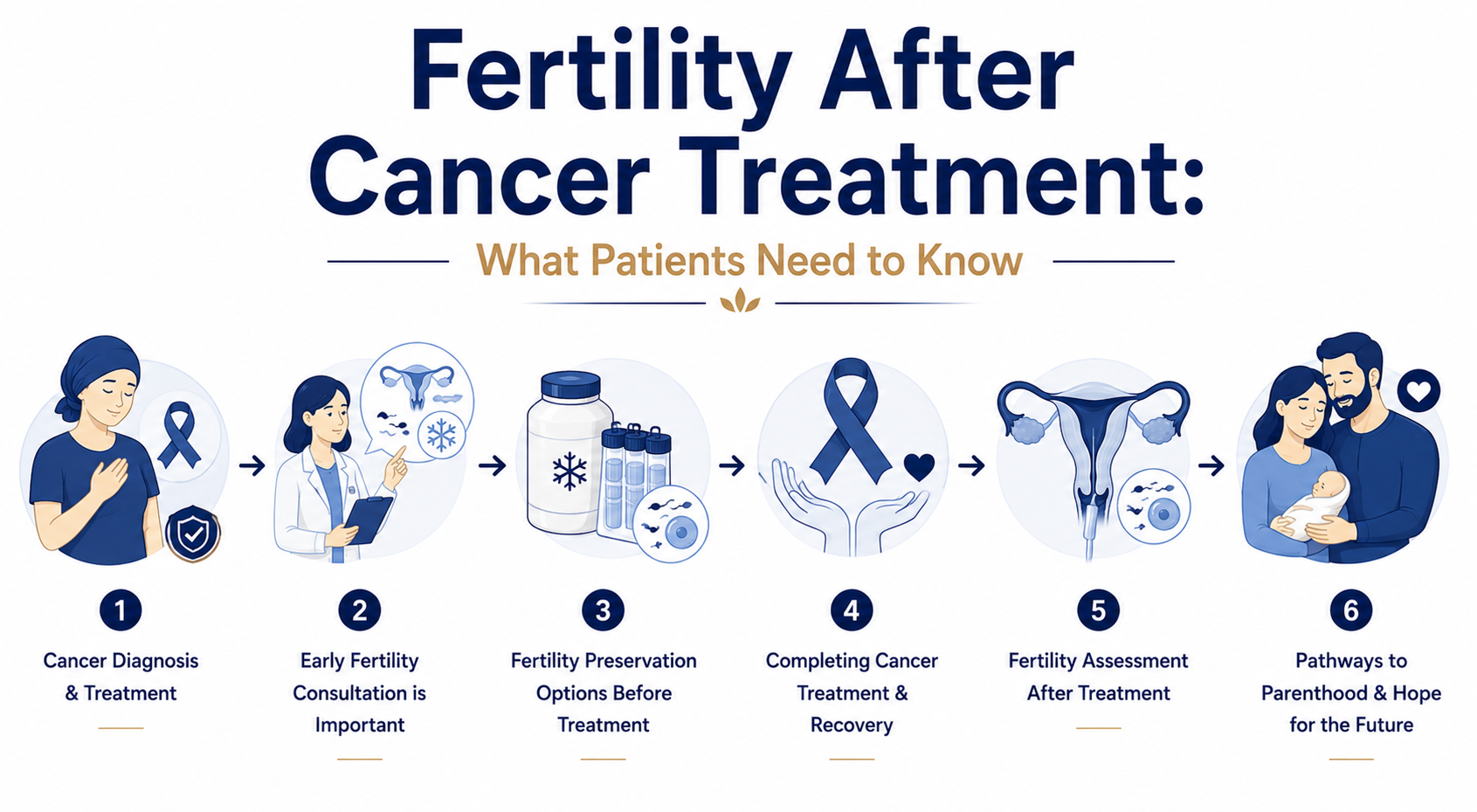
Common effects of cancer treatment on fertility
Cancer Treatment | Possible Effect on Fertility |
Chemotherapy | May damage eggs or sperm, depending on the medication and dosage |
Pelvic radiation | Can affect the ovaries, uterus, or testes |
Surgery involving reproductive organs | May reduce or eliminate natural fertility |
Hormonal therapy | May temporarily delay conception while treatment continues |
Every patient responds differently, which is why fertility assessment after treatment is essential before planning pregnancy.
Does chemotherapy make you infertile?
Chemotherapy is one of the leading causes of treatment-related infertility, but it does not affect everyone in the same way.
Some women continue to ovulate after chemotherapy, while others may experience temporary or permanent ovarian failure. Likewise, some men recover sperm production months or years after treatment, whereas others may continue to have reduced sperm counts.
Recovery factors that affect:
- Age at treatment time
- Chemotherapy drugs type
- Total treatment dose
- Overall reproductive health
Remember, lack of periods does not mean permanent infertility. Similarly, regular periods do not mean that fertility is also preserved. If the semen analysis results are poor, men can also gradually produce sperm again.
Because recovery can take time, fertility specialists often recommend waiting until your body has healed before performing detailed fertility testing.
Can women conceive after chemotherapy?
Many women ask, “Can women conceive after chemotherapy?”
The answer is yes, many do. However, fertility depends on how well ovarian function has recovered after treatment.
Some women regain regular menstrual cycles within months, while others recover more gradually over several years. In some cases, chemotherapy may lead to premature ovarian insufficiency, making natural conception more difficult.
Doctors usually evaluate:
- Ovarian reserve
- Hormone levels
- Menstrual history
- Ultrasound findings
- Overall reproductive health
These tests are used to see if your sperm count is sufficient to have a baby naturally or if fertility intervention will increase your chances of becoming pregnant.
Can men have children after chemotherapy?
A cancer diagnosis affects men emotionally as well as physically, and concerns about future fatherhood are common.
Some men experience temporary reductions in sperm count and sperm quality that gradually improve after treatment. Others may require fertility assistance if sperm production remains low.
A comprehensive semen analysis is usually the first investigation performed after recovery.
Depending on the results, treatment options may include:
- Natural conception
- IUI for selected cases
- IVF
- ICSI for severe male factor infertility
- Some frozen sperm may have been used if sperm was stored prior to treatment
There are also new advances in assisted reproduction, which have aided many cancer survivors in fathering children even when their sperm counts are low.
Pregnancy after cancer treatment: Is it safe?
One of the biggest concerns for survivors is whether pregnancy could affect their health or increase the risk of cancer recurrence.
For many people, pregnancy after cancer treatment is completely safe once their oncologist confirms remission and recommends that it is appropriate to begin trying for a baby.
Ideal waiting time varies as a result of the following:
- Type of cancer
- Treatment received
- Risk of recurrence
- Overall health
- Recommendations from your oncologist
For many experts, waiting until after active treatment and adequate time for recovery is recommended before trying to conceive.
The reassuring news is that, in most cases, a previous cancer does not increase the risk of birth defects or cancer in future children.
When should you have your fertility checked?
Even if you are not planning pregnancy immediately, a fertility evaluation after cancer treatment can provide valuable information about your reproductive health.
Testing may include:
- Hormonal blood tests
- Evaluation of Anti-Müllerian Hormone (AMH)
- Pelvic ultrasound for women
- Semen analysis for males
Ask your oncologist and your fertility specialist for advice. These investigations can help determine your remaining reproductive capacity and enable you to plan your family size with greater information before your fertility naturally decreases further.
IVF after cancer treatment: Is it the right choice?
For many survivors, IVF after cancer treatment offers the best chance of achieving pregnancy, especially when natural conception is difficult or fertility has been affected by chemotherapy or radiation.
Not all cancer survivors have to undergo IVF. Many couples conceive naturally after regaining their fertility. But IVF can be considered if:
- Ovarian reserve is quite low
- The tubes (Fallopian tubes) have been compromised
- Sperm count or sperm quality remains low
- Frozen eggs, embryos, or sperm were preserved before treatment
- Pregnancy has not occurred despite trying naturally
Before beginning treatment, fertility specialists carefully review your medical history, cancer treatment records, hormone levels, and overall health. Your oncologist and fertility doctor often work together to decide when it is safe to proceed.
Fertility options after chemotherapy
If you’re thinking about getting pregnant after chemotherapy, there are a number of options for parenthood available today. This should be based on your age, reproductive health and whether there was any fertility preservation treatment before cancer treatment.
Available fertility treatments
Fertility option | When it may be recommended |
Natural conception | Fertility has recovered, and investigations are reassuring |
IVF | Reduced fertility or difficulty conceiving naturally |
ICSI | Severe male infertility or low sperm count after chemotherapy |
Frozen egg or embryo transfer | Eggs or embryos were preserved before treatment |
Frozen sperm | Men who banked sperm before chemotherapy |
Donor eggs or donor sperm | When healthy eggs or sperm are no longer available |
Adoption | An option for families unable to conceive biologically |
Modern fertility care is highly individualized. A detailed evaluation helps determine which approach offers the highest chance of success while keeping both the patient and future pregnancy safe.
Best fertility treatment for cancer survivors
There is no single best fertility treatment for cancer survivors because every patient’s circumstances are different.
Your fertility specialist considers several important factors before recommending treatment, including:
- Your current age
- Duration of time since completion of cancer treatments
- Previously treated type of cancer
- The quality of eggs in the ovary or the sperm quality
- Overall health
- Previous fertility preservation
- Family-building goals
The treatment required for natural conception will differ for some couples and may involve more advanced reproductive procedures like IVF or ICSI.
Personalized treatment planning remains one of the most important factors influencing successful outcomes.
What if you preserved your fertility before cancer treatment?
Many patients now choose fertility preservation before starting chemotherapy or radiation. This creates valuable opportunities later when they are ready to build a family.
Previously frozen reproductive material may include:
- Eggs
- Embryos
- Sperm
- Ovarian tissue in selected women
Depending on your circumstances, these stored reproductive cells can later be used during IVF treatment. For male patients with frozen sperm, IVF combined with ICSI may provide excellent fertilization rates.
Even if it wasn’t possible to preserve fertility prior to cancer therapy, it doesn’t necessarily mean it is not possible today. For many survivors, conception and pregnancy are still possible with the use of natural methods or through assisted reproductive technologies.
Is pregnancy safe after cancer treatment?
Another common concern is, “Is pregnancy safe after cancer treatment?“
For many survivors, the answer is yes. Pregnancy is often considered safe once cancer treatment has been completed, recovery is satisfactory, and the oncology team confirms there are no medical reasons to delay conception.
Doctors complete an evaluation before a woman tries to become pregnant, including examining:
- General physical health
- Cancer remission status
- Heart function in the event of use of certain chemotherapy drugs
- Hormonal recovery
- To assess the health of the uterus in women who had radiation therapy to the pelvis.
Careful planning allows both mother and baby to receive the safest possible care throughout pregnancy.
Why cancer survivors benefit from specialist fertility care at Allahbadia IVF?
Fertility after cancer requires more than standard infertility treatment. Previous chemotherapy, radiation, surgery, and hormonal therapies often create unique reproductive challenges that need expert management.
- For advanced IVF, ICSI, embryo freezing and fertility preservation services, the infertility specialists at the Allahbadia IVF clinic can discuss the services available to you.
- Up-to-date embryology laboratory and advanced imaging technology.
- Support from experienced fertility professionals, nurses and counsellors with a compassionate attitude
- Caring for a patient’s needs from the first diagnosis through the entire course of treatment.
- A patient-centered focus on healthy pregnancies with safety and long-term outcomes as top priorities.
Meet Dr. Gautam Allahbadia
One such name in the field of reproductive medicine in the region is Dr. Gautam Allahbadia, who has been treating infertility for decades and is a pro in assisted reproduction. His work in the field of reproductive endocrinology and IVF is widely recognized and has contributed to the development of several protocols and techniques that enhance fertility, such as ultrasound-guided embryo transfer.
His philosophy is based on the integration of scientific expertise and personalized therapy. Each patient is provided a clinical, feasible, and compassionate treatment plan, providing cancer survivors with confidence in their next step in family building.
Parenthood after cancer is still possible
Many things in life can be affected by a cancer diagnosis, but a cancer diagnosis does not necessarily mean there is no more time for children. IVF and ICSI are fertility treatments that many survivors can use for successful pregnancies, and for others, pregnancy occurs naturally. The main thing is to be aware of how your treatment could have impacted your reproductive health and to consult an expert before conceiving.
If you have concerns about your fertility following cancer treatment, it’s important not to wait until you’re ready to conceive. A timely evaluation of your fertility can offer you important information as to your options and help you make decisions for the future.
Dr. Gautam Allahbadia at Allahbadia IVF, provides a customization of fertility workup, cutting-edge reproductive procedures, and caring for patients’ medical histories. Every process is carefully managed from fertility preservation to the IVF and ICSI procedures to give you the best possible chance at creating the family you’ve always dreamed of.