How many eggs are needed for IVF?
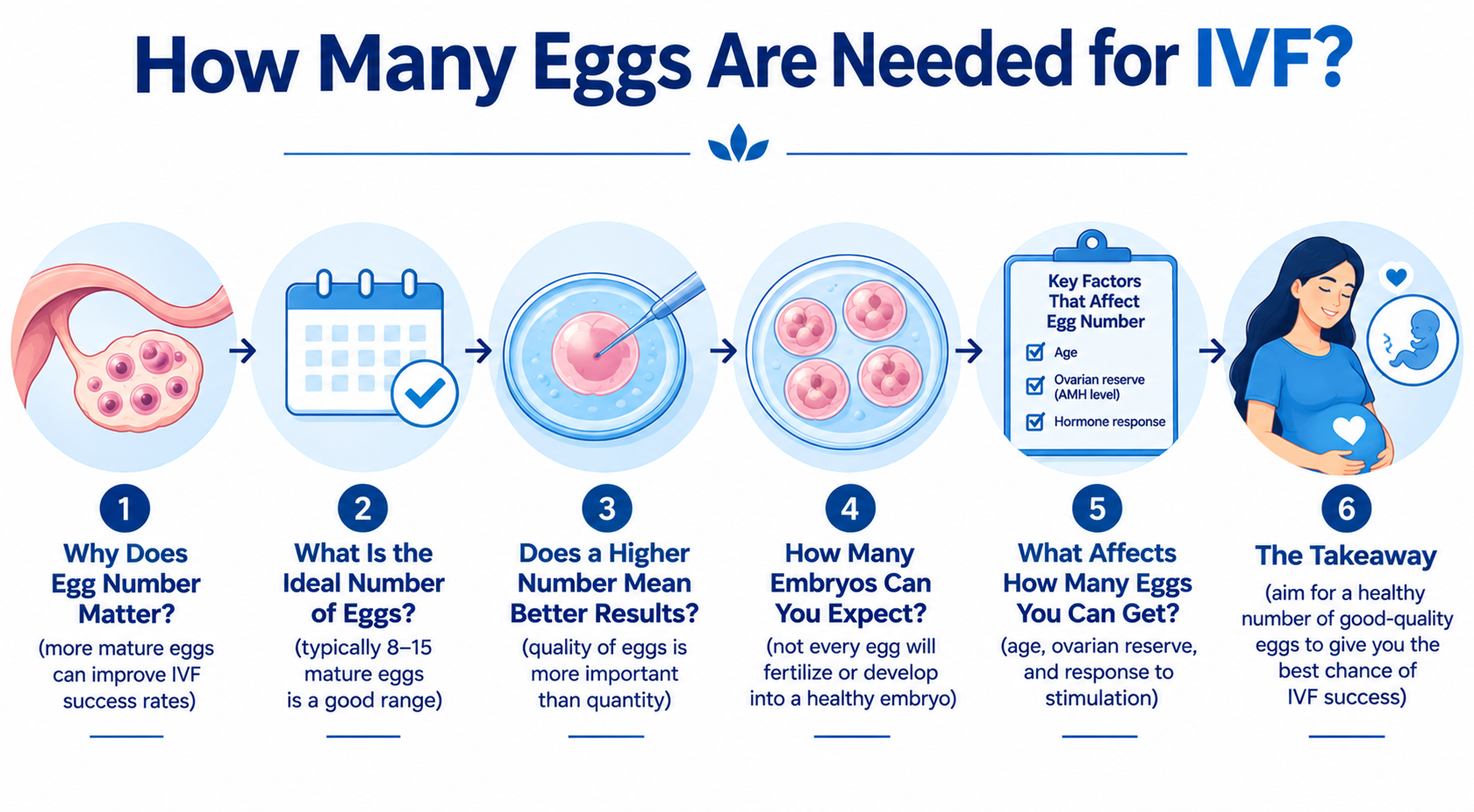
How many eggs are needed for IVF? One of the main questions to consider when undergoing In Vitro Fertilisation (IVF) is what should the ideal egg yield be.
In reproductive medicine, clinical studies show that retrieving between 10 and 15 mature eggs typically strikes the optimal balance for maximizing cumulative pregnancy rates while maintaining patient safety.
At Allahbadia IVF, treatment protocols are carefully calibrated to optimize follicular response, helping individuals navigate their family-building goals with evidence-based guidance.
What is the role of egg quantity and quality in In Vitro Fertilization?
Egg quantity is the starting material used for an IVF cycle, while egg quality determines if they form healthy, chromosomally normal embryos. Even though the goal of controlled ovarian stimulation is to mature multiple follicles at the same time, not all of them will produce a viable egg, and not all blastocysts will be usable.
In IVF, eggs pass through the natural filters. IVF attrition describes the biological loss of the number of individuals at cycle stages. Having a sufficient number of retrieved oocytes at the start helps to ensure that once the egg has been fertilized, the embryo cultured and the embryo screened, there will be at least one embryo of good quality available to transfer.
How many eggs are needed for IVF success at different ages?
Female Age Bracket | Target Mature Egg Yield | Average Euploidy Rate Per Blastocyst | Primary Clinical Focus |
Under 35 Years | 10 – 15 mature eggs | 60% – 70% | High quality per egg; modest egg yield yields strong pregnancy odds |
35 – 37 Years | 12 – 18 mature eggs | 45% – 55% | Mild increase in attrition; balancing egg yield with endometrial readiness |
38 – 40 Years | 15 – 20 mature eggs | 25% – 40% | Managing diminished reserve; individualized stimulation dosing |
Above 40 Years | 15+ mature eggs (or cumulative cycles) | Under 20% | Prioritizing genetic screening (PGT-A) or evaluating third party reproduction oocytes |
How many eggs are good for IVF Retrieval Cycles?
Understanding how many eggs are good for IVF requires reviewing clinical outcome data based on retrieval yields. Retrieving very few egg numbers decreases options for embryos, and trying to retrieve too many egg numbers can pose physical risks but not necessarily better fresh pregnancy rates.
When analyzing how many eggs are needed for IVF retrieval, clinicians group outcomes into specific yield categories:
- Low response (1 to 5 eggs retrieved)
- Moderate response (6 to 9 eggs retrieved)
- Optimal response (10 to 15 eggs retrieved)
- High response (16 to 20+ eggs retrieved)
What is the step-by-step breakdown of IVF Attrition?
To understand how many eggs should be retrieved for IVF to achieve a live birth, it helps to track a typical cycle from retrieval through transfer:
- Egg retrieval (Oocyte pick-up): The patient produces 15 eggs in egg retrieval (Oocyte Pick-Up). Of these around 12 are fully mature (Metaphase II stage) and available for fertilisation.
- Fertilization (IVF or ICSI): Using standard IVF or Intracytoplasmic Sperm Injection (ICSI), around 80% of mature eggs fertilize normally, resulting in 9 to 10 fertilized zygotes.
- Blastocyst culture (Day 5/6): Embryos grow in the laboratory for 5 to 6 days. Typically, 40% to 50% reach the blastocyst stage, leaving 4 to 5 well-developed blastocysts.
- Preimplantation genetic testing (PGT-A): Depending on patient age, genetic screening checks for chromosomal abnormalities (aneuploidy). In a 35-year-old patient, approximately 2 to 3 of these blastocysts test genetically normal (euploid).
- Embryo transfer: The probability of pregnancy is about 60-65%, per embryo transfer. If euploid embryos are still present, they can be frozen for future use, avoiding repeated ovarian stimulation to achieve pregnancy.
What key clinical factors influence your ideal egg target?
A personalized fertility assessment considers several diagnostic and medical factors to determine an individual’s target egg yield:
- Anti-Müllerian Hormone (AMH) and Antral Follicle Count (AFC)
- Paternal sperm quality
- Family building goals
- Gynecological diagnoses
What medical strategies help optimize egg quality and yield?
At Allahbadia IVF, clinical strategies focus on optimizing both the number and developmental potential of retrieved oocytes:
- Tailored ovarian stimulation: Medication protocols are personalized based on patient age, BMI and ovarian reserve testing to stimulate uniform growth of follicles.
- Trigger timing precision: Administering Human Chorionic Gonadotropin (hCG) or GnRH agonist trigger injections at exact times ensures eggs achieve optimal meiotic maturity before retrieval.
- Advanced laboratory techniques: Utilizing ICSI helps maximize fertilization rates when dealing with borderline egg numbers or male factor subfertility.
- Cycle stacking / Embryo banking: For patients with diminished ovarian reserve, performing back-to-back stimulation cycles allows collection of a robust pool of embryos prior to transfer.
Tailored IVF and Ovarian Stimulation Care at Allahbadia IVF
Understanding the egg retrieval expectations demands patient-specific clinical assessment, evidence-based treatment planning, and sophisticated laboratory facilities. Allahbadia IVF offers thorough diagnostic evaluations, such as ovarian reserve tests, in-depth semen analysis, and hormone profile, to assist patients in understanding their reproductive possibilities clearly.
If fertility preservation is a proactive option or if you are considering assisted reproductive technologies such as IVF, ICSI or other advanced fertility preservation methods for women with diminished ovarian reserve, expert medical advice at an early stage can help you make well-informed choices for your health care.
Take the next step in your fertility journey
If you have questions about egg retrieval targets or wish to discuss personalized fertility management, schedule a comprehensive consultation with the medical specialists at Allahbadia IVF today.