Positive signs after Embryo Transfer: What to expect
The days after an embryo transfer can make even the smallest physical change feel significant. A mild cramp, a spot of blood, unusual tiredness, or simply feeling no different at all can raise the same question: Did the embryo implant?
Some positive signs after embryo transfer may overlap with early pregnancy, but symptoms alone cannot confirm whether treatment has worked. Fertility medications, particularly progesterone, can produce similar changes. Some women also reach their pregnancy test with few or no noticeable symptoms.
Understanding what is common during this waiting period can make it easier to know what deserves attention and when to contact your fertility team.
Through this blog Allahbadia IVF shares insights about the common symptoms after embryo transfer, possible early signs of implantation and pregnancy, and why having no symptoms can still be normal. You will also learn when pregnancy testing is usually performed, which symptoms need medical attention, and what to expect during the days following your transfer.
What happens after an Embryo Transfer?
After transfer, the embryo continues developing before attaching to the uterine lining. With a blastocyst transfer, implantation may begin within the first few days. If implantation occurs, cells that will form the placenta begin producing human chorionic gonadotropin, or hCG.
The difficulty is that this early biological process may cause no obvious sensation. Even when symptoms occur, they can resemble premenstrual changes or side effects of the hormonal medications used during IVF.
That is why early signs of pregnancy after IVF should be viewed as possibilities rather than confirmation of pregnancy.
Did you know? Having no noticeable symptoms after embryo transfer does not mean the transfer was unsuccessful. Some women have few or no early symptoms and may still have a positive pregnancy test. |
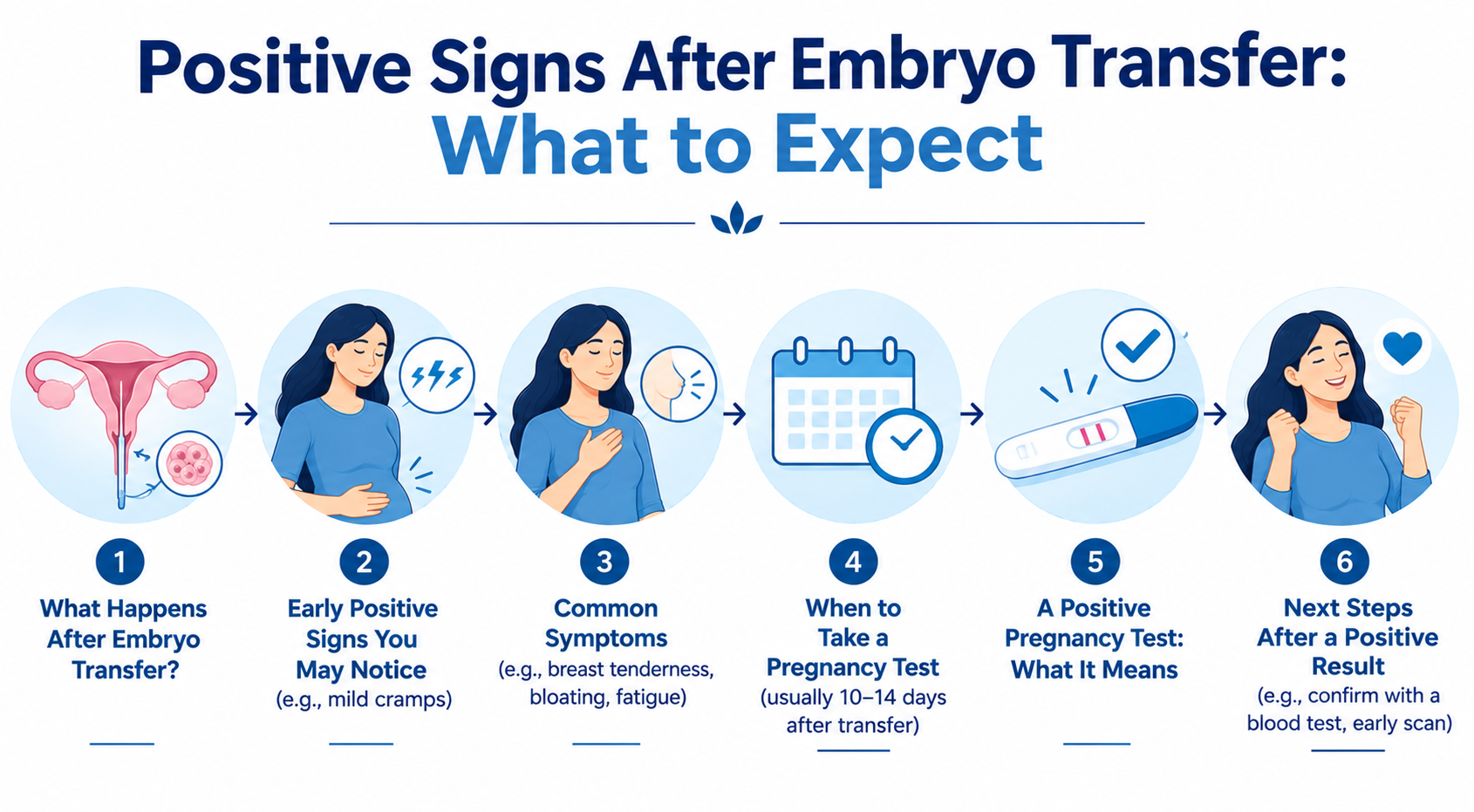
What are the positive signs after Embryo Transfer?
Several early pregnancy signs after embryo transfer are commonly reported during the waiting period.
1. Light spotting
A small amount of pink, brown, or light-colored spotting may occur around the time of implantation. However, spotting can also result from cervical irritation after the procedure or vaginal progesterone.
If the bleeding is heavy, especially if the bleeding is accompanied by a lot of pain, then this should be reported to your fertility clinic.
2. Mild cramping
Mild lower abdominal and/or pelvic cramps are noticed by some women following transfer. These can happen during implantation, although it’s also possible to get a similar discomfort from progesterone and the transfer procedure.
If the pain is severe, increasing or on one side only, it is different and needs medical advice.
3. Breast tenderness
Breasts can feel fuller than usual, swollen, sensitive or tender. While this is one of the potential early pregnancy symptoms after embryo transfer, estrogen and progestrogen could give the same symptom.
4. Fatigue
Another frequent change that is reported is unusual fatigue. Fatigue may be caused by high levels of progesterone in early pregnancy or from use of supplemental progesterone during IVF.
5. Vaginal Discharge changes
A few women experience more white or clear vaginal fluid. Vaginal progesterone products can also cause alterations in the nature and quantity of vaginal discharge.
If discharge becomes foul-smelling or itching, burning, fever or pain occurs, contact your doctor.
6. Bloating
IVF may cause a feeling of fullness or bloating in the abdomen. Bloating can be due to hormonal medications or recent stimulation of the ovary, so this should not be used for certain as an indicator of a successful implant.
7. A Missed Period
For women with regular periods, the missed period could be a sign of encouragement. But progesterone support may affect bleeding periods. It is better to have a scheduled pregnancy test than to wait for a period.
Symptoms after Embryo Transfer: What to expect after Embryo Transfer?
Symptom | Possible Explanation |
Light spotting | Implantation, cervical irritation, or medication |
Mild cramping | Implantation, progesterone, or the transfer procedure |
Breast tenderness | Hormonal medication or early pregnancy |
Fatigue | Progesterone or early pregnancy |
Bloating | Hormonal treatment or ovarian stimulation |
Increased discharge | Progesterone or hormonal changes |
No symptoms | Can also occur in a successful cycle |
The key point is simple: there is no single symptom, or combination of symptoms, that can reliably tell you whether implantation has occurred.
Can you have a successful Embryo Transfer with no symptoms?
Yes. No symptoms after embryo transfer do not mean that IVF has failed.
Pregnancy develops differently from one person to another. Some women notice several changes during the waiting period, while others feel much as they normally do. Even the same woman may experience very different symptoms in separate pregnancies.
Try not to compare your experience with someone else’s IVF cycle. The presence, absence, or intensity of symptoms does not provide a dependable measure of the outcome.
When should you take a Pregnancy Test?
- The most reliable way to determine whether the embryo has implanted is a pregnancy test performed at the time recommended by your fertility specialist.
- A blood beta-hCG test can detect and measure hCG. Clinics commonly schedule testing roughly 9 to 14 days after transfer, although the exact timing depends on the embryo stage and treatment protocol.
- Testing at home too early can create confusion. A pregnancy test may be falsely negative because hCG has not risen enough yet.
- In some treatment cycles, residual hCG from a trigger injection can also cause an early false-positive result.
- Follow the testing date provided by your IVF team rather than using symptoms to decide when to test.
What should you do during the waiting period?
- Continue all prescribed medicines exactly as instructed, even if you experience spotting or think your period may be starting.
- Normal daily movement is generally possible after embryo transfer, although your fertility specialist may provide individual instructions about exercise, sexual activity, travel, or other activities.
- Contact your clinic promptly if you develop heavy bleeding, severe or increasing abdominal pain, marked abdominal swelling, breathing difficulty, persistent vomiting, fainting, or fever.
Why choose Allahbadia IVF for your fertility journey?
Embryo transfer is a technically important part of IVF, and care does not end once the procedure is completed.
At Allahbadia IVF, treatment is led by Dr. Gautam Allahbadia, Consultant Obstetrics & Gynecology and Medical Director, with decades of experience in reproductive medicine. His work includes extensive experience with ultrasound-guided embryo transfer and individualized fertility protocols.
Patients at Allahbadia IVF have access to:
- Personalized fertility assessment and treatment planning
- IVF and ICSI
- IVF Lite or Minimal Stimulation IVF
- Advanced embryology and diagnostic services
- Genetic testing options where clinically appropriate
- Fertility preservation services
- Ongoing medical and emotional support throughout treatment
The clinic’s approach combines reproductive medicine expertise with treatment planning tailored to the individual patient.
From Embryo Transfer to Pregnancy Test: Take it one day at a time
The waiting period for the signs of successful embryo transfer is filled with uncertainty, and symptoms rarely provide a definite answer. Spotting, cramping, fatigue, breast tenderness, or bloating may occur in early pregnancy, but they may also be related to fertility medications. Equally, having no symptoms can be completely normal.
A beta-hCG test remains the dependable way to find out whether implantation has resulted in pregnancy.
If you are preparing for embryo transfer or have questions about symptoms following IVF, consult Dr. Gautam Allahbadia and the team at Allahbadia IVF for individualized guidance throughout your treatment.